|
|
Program History  |
||||||||||||||||||||||||||||||||||||||||||||||||||||||||||||||||||||||
 |
White Stag History Since 1933From Gödöllõ, Hungary to Monterey, California to the Sierra Nevada2021 | 2020 | 2019 | 2018 | 2017 | 2016 | 2015 | 2014 | 2013 | 2012 | 2011 | 2010 | 2009 | 2008 | 2007 | 2006 | 2005 | 2004 | 2003 | 2002 | 2001 | 2000 | 1999 | 1998 | 1997 | 1996 | 1995 | 1994 | 1993 | 1992 | 1990 | 1987 | 1985 | 1983 | 1982 | 1980 | 1979 | 1978 | 1977 | 1976 | 1975 | 1973 | 1972 | 1971 | 1970 | 1969 | 1968 | 1967 | 1965 | 1964 | 1963 | 1962 | 1961 | 1960 | 1959 | 1958 | 1957 | 1951 | 1946 | 1941 | 1933 | 1907 2021 | topWhite Stag Monterey sets its fees for its two camp dates for June 20-26 and July 18-24, 2021 at $459. White Stag Sierra plans on one week of camp from July 11-17. Mark Weyland is Program Director. Its camp fee is $425. 2020 | topAfter five years of leadership, Larry Challis stepped down as Program Director and Mark Weyland was selected in his place. Mark first attended White Stag as a candidate in 1980 in Phase 1 Patrol Member Development. He was preceded by his two older brothers who had also been candidates and served on youth staff. He attended all three phases and in 1983 was selected to serve on Phase 1 youth staff. His leadership skills were quickly recognized and in his first year on staff he was given the Silver Stag award for his outstanding contributions to the program. He then served on Phase 2 and then Phase 3 youth staff in 1985 and 1986-89. He served on the staff of White Stag Monterey from 2011 to 2016. He joined White Stag Sierra as leader of Phase 3 Troop Leadership Development in 2017, after which he became Program Director. Due to the Coronovirus Pandemic, White Stag Sierra made the difficult decision to offer an online-only program. Youth from a number of states took part in virtual sessions on a variety of leadership skills. Adhering to strict safety protocols, White Stag Monterey ran two sessions of camp from July 19-25 & August 2-8 at Camp Piney Creek. 2019 | topAt White Stag Sierra, Sandie Powell is Phase 1 advisor, Stacey Bauer (former White Stag Monterey cookie) is Phase 2 advisor, and Geoff Nelson (former White Stag Monterey phase advisor) is Phase 3 advisor. Mark Weyland (former White Stag Monterey Phase Advisor) is serving as Program Director. Camp fees are $390 if not paid before January 1. Camp is set for the second week of July 2019. White Stag Monterey plans two weeks of camp offering three phases during the third weeks of June and July 2019. Steve Cardinalli and Connie Halbach return as Camp Directors. Camp fees are $449.00 after May 1. 2018 | topWhite Stag Sierra at Camp Robert Cole during early July is attended by youth from New York State, Mexico, China, and California. Larry Challis completed his fifth year as Program Director. White Stag Monterey completed two weeks of camp during June and July at Piney Creek Camp near Arroyo Seco. White Stag Monterey was led by Steve Cardinalli and Connie Halbach. 2017 | topIn Northern California, White Stag Sierra announced a week of camp from July 11-17, 2021 . Larry Challis and Tom Weibert are co-Program Directors once again. Camp Robert Cole in the Tahoe National Forest is their base of operations. Their camp includes high adventure programs including canoeing, hiking, swimming, and climbing in the alpine forest immediately around Camp Cole. Candidate fees were set at $375 and youth staff fees at $100. The White Stag Academy announced two weeks of camp in June and July, and a new graduate level course named Phase 4 for youth who complete Phase 3. They stated that participants will be "immersed into the philosophy of the 11 leadership competencies including the Edge methods. They will also be exposed to the Aims and Methods of the program. They will be given a detailed exposure to the history of the program. And an extensive exposure to the spirit, history and traditions." Stephanie Cardinalli is selected to lead the program. The Academy raises fees to $509 for candidates and $325 for youth staff. 2016 | topThe White Stag Association in Northern California held a week of camp during the second week of July at Camp Cole. The Association Board appointed Larry Challis and Tom Weibert are Program Directors. Both men first attended the program as youth. The Association obtained a long-term agreement to use Camp Cole. They committed to expanding high-adventure elements in the program, including canoeing in Lake Sterling adjacent to Camp Cole and mountain-climbing in the many nearby peaks. Camp fees were set at $345. About 70 youth attended camp. Association Board President Wayne Veatch passed away and Tom Weibert stepped up to serve in his place. The White Stag program in Arroyo Seco announced two weeks of camp in early and late July at their new, undeveloped land on Piney Creek. Connie Halback returned as Program Director. Although adjacent to Los Padres National Forest, the two nearest campgrounds are car campgrounds, and they were required to drive campers out of camp for their hikes.The Academy raised fees 20% to $429. A total of 420 participants attended camp. 2015 | topIn Northern California, the White Stag Sierra program continued with long-time alumni Larry Challis as Program Director. Larry was a candidate in 1965-67, and then served on youth staff for two years. From 2011 to 2014, he served on the adult staff of the Monterey-based program. He selected youth staff with a goal on building their and the candidate's competence in a number of skill areas. The Monterey-based White Stag Academy selected Connie Halbach as Program Director. Connie has more than 7 years of experience leading different phases of the White Stag Academy program in Monterey, and many more years as a Scout leader. The White Stag Academy presented its summer camp at three locations in 2015: The Ranch at Arroyo Seco, at Camp Lindblad in Santa Cruz, and at Camp Tamarancho in Marin County. In a historic move, the Academy purchased land in Arroyo Seco for a summer camp. They bought 160 acres of land off Carmel Valley Road on Sections 18-20 in Carmel Valley, formerly used as a gun club, for $462,500. They raised over $100,000 as a down payment and on September 17, 2015, closed escrow. They named their new location Piney Creek Camp. 2014 | top
The White Stag Sierra program in the San Francisco Bay Area invites long-time White Stag alumni Larry Challis, who first served on youth staff in 1968, to serve as Program Director with John Chiorini. Larry served on the White Stag Monterey’s adult staff in Monterey for four years and his sons later joined the youth staff. In 2014, Larry was asked by the leaders of the White Stag Association in northern California to become as Program Director with John. John was the very first Senior Patrol Leader in 1958. They host leadership camp at Camp Robert Cole in the Sierra Nevada Mountains outside of Truckee, California. The youth staff lead about 81 youth at their summer camp. In Monterey, Steve Cardinalli served for the 16th time as the Program Director of the White Stag Academy. The Academy held two camps, one at the rustic Ranch in Arroyo Seco and the second at Camp Lindblad near Boulder Creek, California. Youth from Brazil, Thailand, and Taiwan attended the second session of camp. About 80 youth staff conducted the programs for about 400 youth at two weeks of summer camp. The White Stag Academy also formed the White Stag Program Foundation. 2013 | topAt the White Stag Academy, Steve Cardinalli was named Program Director and Tony Lamarque continued as Camp Director. They attracted a record-breaking 449 participants to its two week-long sessions from overseas, including over 33 youth from Hong Kong, Taiwan, and mainland China, a youth from Martinique, another youth from France, two candidates from Wisconsin, and a youth from Texas. For the first time, they split Phase 2 into two troops during both weeks of camp. In all, the youth staff ran 10 different programs over the two sessions of camp, including two NYLT troops. They were led by 88 youth staff and 22 volunteer adult staff. Will Callen was recognized with the Silver Stag award during the first session of camp. At White Stag Sierra, Dave Stein continued as Program Director for a second year and also headed up Phase 3. They held their camp at Camp Wolfsboro. 2012 | topDavid Stein was re-appointed as Program Director for White Stag Sierra. At the White Stag Academy in Monterey, Steve Cardinalli stepped aside after 6 years as President of the board and Tony Lamarque was elected in his place. Tony was also re-appointed Camp Director. Former Phase III Advisor Tom Weibert took up the mantle as Program Director once again. The board approved the largest budget ever, nearly $100,000. Adult leadership development. The Monterey-based program kicked off the program year with a record-breaking 21 adults attending the Adult Staff Development Conference. The Adult Leadership Development concept was renewed with an emphasis on developing the adult staff concurrently with the youth staff during the program year. More than 80 youth were welcomed on youth staff, another record for the program. New facility built. Only four months before summer camp and with hundreds of paid reservations, the White Stag Academy was told they could not use Camp Lindblad. In characteristic fashion, the volunteer adult staff rose to the challenge. Board President Tony Lamarque offered land he co-owned for the program's use. The adult staff doubled-down and contributed hundreds of hours and long weekends to a half-dozen work parties. They dug ditches and laid pipe for drinking fountains and hose bibs, built a 600 seat campfire circle, an outdoor kitchen, and cleared campsites for 400 participants. They obtained donated kitchen equipment—including a 14x17 foot walk-in refrigerator—a large, industrial generator, and many other resources. Without a lease or any assurance they could use the site and equipment they had installed again the next year, the "White Stag Ranch" opened for Session 1 on July 8. Their two weeks of summer camp were attended by a record-breaking 430 candidate participants, led by 80 youth staff and 18 volunteer adult staff. 2011 | topIn the San Francisco Bay Area, the White Stag Sierra program reached out to a past director and tapped David Stein as Program Director. At the end of the year, 25 candidates attended their summer camp. At the White Stag Academy, Tony Lamarque was re-appointed as Camp Director and former Phase III Advisor Tom Weibert were asked to serve as Co-Program Directors. Brian Phelps was asked to pilot-test a new program to help train prospective adult leaders for the program, but when the Academy also decided to put on a NYLT program, the adult program was cancelled. The White Stag Academy offered to present National Youth Leadership Training (NYLT) for the Alameda Council. To attract a greater variety of youth, White Stag Academy decides to present the NYLT program. To encourage individual participation, many of the canned sessions usually presented on DVD are instead taught using flip charts. Twenty-nine trainees attended the two, one-week sessions. At the White Stag Academy's program at Camp Lindblad, 333 candidates attended two weeks of summer camp. During the second week of summer camp, 29 youth from Taiwan took part, the largest contingent from a foreign country ever to attend White Stag. Another youth from Paris was also present. Thirty-seven years after White Stag had gone coed, the National BSA announced that the Boy Scouting and Venturing junior leader training programs would be combined. Boys and girls are trained together. The step also removed Boy Scout-specific language from the training program, including "Senior Patrol Leader", "Patrol Leader," and others. 2010 | topThe White Stag family lost a treasured leader among the second generation who inherited the program from our founders. Paul Davis (May 22, 1953-February 25, 2010), one of the first generation of adult leaders who started in the program as a boy, passed away unexpectedly. After joining the program as a candidate, he followed that with many years of service on youth staff and later adult staff. He was one of the first youth participants to become in 1973 a Phase Scoutmaster, in 1977 the Program Director, and in 1983 the President of the White Stag Association. White Stag Sierra names Liz Nunn-Gage as Program Director for the third year until June, when she resigned for family reasons, and Association President Karl Emrich led the program during camp. The White Stag Academy appointed Tony Lamarque as Camp Director and Brian Phelps as Program Director. The White Stag Academy decided to offer two camps again and set a goal of 300 candidates for 2010. The second session of their camp attracted 115 candidates, for a total of 253 participants. 2009 | top
Brian Phelps and Tony Lamarque were co-Program Directors at the White Stag Academy. Liz Nunn-Gage was Program Director for the third year at White Stag Sierra. For the first time, the Monterey-based White Stag Academy committed to offer two week-long summer camp at two locations: Camp Lindblad in the Santa Cruz Mountains and Camp Tamarancho in Marin County. The two camps attracted 199 participants, including for the first time two young men from abroad, Henry Chen from Taiwan and Julien Pagnac from Paris. White Stag Sierra with headquarters in Concord, California, plans for its 51st year with its summer camp at Camp Marin Sierra near Truckee in the Tahoe National Forest. Twenty candidates attend Marin Sierra. 2008 | topThe White Stag Academy in Monterey attracts 133 candidates to Cutter Scout Reservation including 9 from Los Angeles, and 53 attend the White Stag Sierra program at Camp Mensinger in the Sierras. In August, 53 youth and adults agree to serve on the Academy adult and youth staff. They commit to providing a summer camp program for 200 candidates in 2009. The explore how to add a second week of summer camp for youth from other areas. White Stag Sierra hosts the 50th anniversary of the program at a weekend conference in Hayward, California during August, 2008. White Stag alumni from as far away as Alaska attended White Stag Sierra's expanded Indaba. They discussed how to raise the number of candidates attending from the 53 who attended in 2007. A symposium was held looking forward to the next 50 years. White Stag leaders estimated that over 20,000 youth had attended White Stag since its inception in 1958. Tony Lamarque was selected as Program Director in Monterey and Liz Nunn-Gage was Program Director for the second year at White Stag Sierra. Founders passing: On January 4, 2008, we lost the last of the four men considered our founders: Joe St. Clair. Joe was 94 years old and was a constant inspiration to the White Stag program and his family. He will be sorely missed. 2007 | topTo satisfy local council needs, the White Stag Academy studied how to offer NYLT as an adjunct to the rest of its program. Concluding they could not currently support both White Stag and an NYLT program, the leadership put aside any plan of presenting NYLT in parallel to White Stag at that time. The White Stag Sierra program in the San Francisco Bay Area attracted 53 participants. 2006 | topOnce again, the garrison flag flew over the lake at Cutter: Steve Cardinalli was Director, Wynn Kageyama led Phase 1, Craig Kennedy led Phase 2 and Tim Pecka led Phase 3. The Girl Scouts of Monterey adapted the White Stag program and renamed it Artimus. It was the first leadership training course for Monterey Bay Area Girl Scouts. The White Stag Academy program at Camp Cutter had 70 candidate participants. 2005 | topThe reorganized White Stag volunteers in Monterey incorporate the White Stag Leadership Development Academy and receive federal approval as a 501(c)3 non-profit organization. Unlike the White Stag Association program in the Sierra Nevada, whose leaders are elected from a broad and open membership, the board of the Association is closed to outside members and choose their own leaders. Steve Cardinalli was elected as President. 2004 | topLeaders from the MBAC White Stag course ran an additional White Stag program. This program was open to girls only, sponsored by the Girl Scouts of Monterey but conducted by Crew 122. Open to ages 10½-18 and was held at Cutter. Steve Cardinalli was Director, Gary Casper Phase 1 Scoutmaster, Carmen Gonzalez was Phase 2 Scoutmaster, and John Donnelly was the Phase 3 Scoutmaster. This course ran as a Girl Scout-based “White Stag” training for 2004 and 2005. The Pico White Stag course ran concurrently under the Directorship of Jeff Harber. White Stag Director Steve Cardinalli served on the National Task Force that was charged with updating the junior leader training program. The Monterey Bay Area Council celebrated the 50th anniversary of Pico Blanco Scout Reservation. They issued a series of commemorative patches that display the White Stag logo, acknowledging the key role the program has played at Pico Blanco during the past 50 years. 2003 | topThe program lost two great leaders. Béla H. Bánáthy, educator, researcher and author, had a lifelong involvement with the Boy Scouts. The genesis was the 1933 Boy Scout World Jamboree in Hungary. At that Jamboree, Lord Baden Powell, the chief of the Boy Scout Movement, inspired him through his message of forever seeking and following the ideal. Another long-time friend was lost when Paul Sujan died on December 12. Paul was a young Sea Scout attending the 1933 World Jamboree when Boy Scout founder, Lord Robert Baden-Powell, rode into his camp and tasted his stew. Paul served as Quartermaster during White Stag Leadership Development camp every summer from 1957 to 1996.
2002 | topCofounder Fran Petersen passed away. In 1959, during the second year of the program, Fran Petersen had been Assistant Scoutmaster (Training) for White Stag. He remained with the program for another 15 years, serving in various capacities, and returned again later on. Fran has been instrumental in attracting the attention of the National BSA Council Training Committee to White Stag. The National BSA later adapted the White Stag model as a nation-wide model for junior leader training. The White Stag Sierra group uses Camp Marin Sierra for its 2002 program. The White Stag program in the Golden Empire Council is discontinued when the council decides to implement the standardized National Youth Leadership Training program. 2001 | topFor the first time ever, White Stag camp was cancelled part way through the week when a wildfire sweeps through Tahoe National Forest. Scouts from the program at Camp Marin Sierra were evacuated to a school in Truckee and everyone was reunited with their parents and families without incident. Of 29 participants who attend Junior Leader Training in Chico, 25 sign up for staff for the next year. 1999 | topSummer camp at Pico Blanco sells out for the first time in several years. Over 176 candidates were pre-registered. 2000 | topThe Golden Empire Council in Sacramento, California commits to a Junior Leader Training program incorporating the White Stag methods. The first camp was held in summer 2001 near Chico, California. Jon Wren was Program Director. This becomes the third location that the White Stag methods were officially implemented, the second where the program was incorporated directly into the Council's JLT program. The Monterey Bay Area Council describe the White Stag Academy's program by announcing "This course will change your life! There is JLT using the White Stag method, steeped in spirit and tradition, and then there is just JLT. The Monterey Bay Area Council has reviewed this JLT using the White Stag method and concluded that the course offered not only meets National's standards for JLT, but, goes beyond in the fun, experience and leadership development provided." The National BSA Council began to look at how JLT might more follow closely follow the revised Wood Badge program, Wood Badge for the 21st Century. White Stag Director Steve Cardinalli served on the JLT Task Force who were given the charge of revising junior leader training. 1998 | topNearly 140 candidates attend the summer camp program in Pico Blanco and 80 youth attend camp at Camp Marin Sierra. Eight youth from the Redding area participate on staff as they move towards launching the new White Stag program in the northern reaches of California. Two books—Follow the White Stag and Resources for Leadership—were republished, detailing the program and the leadership competencies. These help to make the ideals and ideas of White Stag Leadership Development and the competencies available to future generations. 1997 | topThree of the founding fathers of the White Stag program gather at a reunion and a dedication of the plaque at Pico Blanco Scout Reservation. Béla Bánáthy, Joe St. Clair, and Uncle Paul Sujan were present—only ill health keeps Fran Petersen away. The leaders from both summer camp programs were present. Bánáthy issues a ten point challenge to a new generation of What Stag leaders outlining a future vision for the program. Inquiries were received from individuals and groups in distant locations in California requesting assistance in creating a White Stag program in their local area. In early fall, a group of past and present program leaders gather at the Presidio of Monterey to chart the future of the White Stag program. 1996 | topTwo camps were again held, one in June at Pico and the second in August in the Sierra Nevada. Over 300 individuals receive training in the White Stag program that summer. The eleven leadership competencies continue to be taught to thousands of participants in the Wood Badge training program each year. 1995 | topA White Stag was engraved in a six-foot redwood log and a plaque are dedicated at Camp Pico Blanco commemorating the founding of White Stag by Béla Bánáthy, Joe St. Clair, Paul Sujan, and Fran Petersen. Steve Cardinalli continues to serve as Program Director for the Pico camp through 1997. The White Stag Sierra program moves its program back to Camp Mensinger east of Sonora, California. 1994 | top
Democracy was reestablished in Hungary. The idea emerges of setting the statue of a Boy Scout, once across from the Guard Barracks in Gödöllõ, back in its place. After a long search, it was established that the original statue by Lõrinc Siklôdy cannot be found. A committee established for erecting the statue decides to have Zsigmond Kisfaludy Strobl's statuette entitled The Boy Scout enlarged. The enlargement of the 50 cm high statuette was completed by a student of Kisfaludy Strobl, Istvân Paâl. The new statue of a Boy Scout standing on the original pedestal was unveiled on April 23, 1994, commemorating once again the 1933 World Jamboree. Back in the United States, the leadership of Patrol Member Development commit to two complete troops for the next program year. Camp was set for August 14-20 at Camp Marin Sierra. In the end, two Patrol Leader Development troops along with a single Patrol Member Development troop and a single Troop Leader Development troop were trained. A new generation of youth staff were trained in the White Stag method at Pico Blanco Scout Reservation. Later that summer 87 candidates once again attend White Stag Leadership Development at Pico Blanco Scout Reservation led by Program Director Steve Cardinalli. The adult staff once again stand at The Rock to receive their neckerchiefs. The Monterey Bay Area Council recognized Steve Cardinalli for his service to youth with the Silver Beaver award.
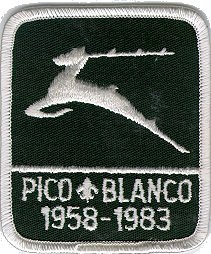
The Monterey Bay Area Council celebrated the 50th anniversary of Pico Blanco Scout Reservation. They issued a series of commemorative patches that featured the White Stag symbol, acknowledging White Stag's key presence at Pico Blanco camp since 1958. 1993-94 | topPhil Smith, a veteran of 17 years of continuous activity in White Stag, was named Program Director for 1993-94. Eighty-eight candidates attended camp at White Stag at Camp Marin Sierra. On the Monterey Peninsula, alumni Steve Cardinalli was the Monterey Bay Area Council Training Chairman. He met with Uncle Paul and they discussed about bringing White Stag back to Pico Blanco Scout Reservation. They met with founder Béla and Joe St. Clair who encouraged him to continue to grow the White Stag program. Steve Cardinalli organized local White Stag alumni and produced the council's Troop Leader Training program using the White Stag method. They set June 14-20, 1994 as the date for a second White Stag camp to be held at Camp Pico Blanco. Lew Orans was selected by the National Council to revise the junior leader training program. He worked on both the 1993 and 1995 revisions to the BSA’s Junior Leader Training Conference Staff Guide. 1992 | topFor the second time ever, White Stag camp is held in the Sierra Nevada Mountains, this time at Camp Marin Sierra, off Highway 80 near Nevada City. Fees were set at $150, or $135 for early registration. From this point forward, the membership of the White Stag program, originally founded on the Monterey Peninsula, migrates towards the San Francisco Bay Area. To distinguish themselves, they later christen their program "White Stag Sierra." 1990-91 | topBill Southam, himself a Scout in White Stag participant and youth staff leader in the 1960s, accepted the challenge and became Program Director for 1990-92. Camp Cutter was unavailable and the program returned to Skylark Girl Scout Camp on the San Mateo coast while a more suitable site was scouted out. Béla Bánáthy, a long-standing member of the Hungarian Scout Association Abroad (Külföldi Magyar Cserkészszövetség), returns to Hungary following its renewed freedom. He helps restart the Hungarian Scout Association. Hungary was the first formerly Soviet block country to win readmission to the World Scout Conference. 1987-89 | topScott Weylan becomes Program Director for 1987-89. Scouting was once again legalized in Hungary. The Boy Scouts of America publishes A History of Wood Badge in the United States. It credits modern Wood Badge's origins to the White Stag program:[6] These concepts of leadership development came into focus through Béla Bánáthy. A member of the council executive board, council chairman of training, Scoutmaster, Silver Beaver, Wood Badge course director, director of training for the Boy Scout Association in Hungary, his inspiration and insight made him the spiritual guide to leadership development as a practical and workable part of Scouting. 1985-86 | topDave Stein assumed the role of Program Director. Camp was held at Cutter Scout Reservation for the next five years. 1983 | top
Post President Barbara Clough was selected by the Monterey Bay Area Council to attend the National Explorer's Congress in Dallas, Texas in April. The Post elects to organize a Campfire group for its members less than the minimum age (14) for Post membership. The President of the Monterey Bay Area Council Explorer President's Association was Post 122 Vice-President Tim Tuscany. Paul Davis was elected Association Board President. Over 150 people attend the 25th Anniversary Indaba held at Grant Ranch near Morgan Hill. An informal group meets and begins to talk about the next twenty-five years: What will White Stag Leadership Development do to meet this challenge? In a closing address, former Director Jim Said offers a challenge: "The doubling time for information has gone from 100 years to a mere five years. In the next 25 years this time will shorten at an ever-increasing rate... Those who will secure the future of White Stag must make themselves known... The task before us was not an easy one. Some of you will succeed and impart that which you have learned effectively to others. I challenge you, when the cry Follow me rings out, answer it." A subcommittee was formed to begin analyzing strategies and alternatives. 1982 | topPost President Deirdre Morgan becomes the (Northern California) Area III Explorer Chairwoman. She receives the National Exploring Leadership Award at the Area III Explorer President's Congress. It was presented by the Monterey Bay Area Council in recognition of her contributions to the Council Exploring Presidents Association (EPA). Post member Iain Morgan was the Monterey Bay Area Council representative to the Western Region EPA. The Explorer Post 122 White Stag Youth Leadership Development was re-chartered to the White Stag Youth Leadership Development Association, now incorporated as a tax-exempt 501(C)3 organization. Seven board members were elected: Peggy Hudson, Chairman and President; Brian Phelps, First Vice-President; Foster Thompson, Second Vice-President; Paul Davis, Third Vice-President; Susan Morgan, Secretary; Sheila Hutchings, Treasurer; and Joe St. Clair, member-at-large. Peggy Hudson declined to serve because her family was leaving the Monterey Bay Area. Joe St. Clair was next asked to serve as President. He accepted and Ian Morgan was elected to serve as the seventh member of the board. John Chiorini, the White Stag program's first Senior Patrol Leader, now Vice President, Training and Development, of Mellonics (Litton Industries), in Sunnyvale, accepted chairmanship of the Twenty-Fifth Reunion Celebration. A database of all past members was begun and over 2000 people were initially mailed invitations. Brian Phelps was Program Director for 1982-84. 1980-82 | topA man who has not been active in White Stag for many years was invited back, upon his "retirement," to assume leadership in a difficult transition period: Wayne Rosenoff was Director for two critical years as the program adjusts to operating without the support of the local council. 1980 | topThe first woman, Margarete Sujan, was Advisor (what had been called Scoutmaster) of Phase II, Patrol Leader Development. The Post Committee commits to a concept of total youth involvement in all phases of post operation. Paul (Uncle Paul) Sujan, Quartermaster since the program's inception, supervises the equipment section; Peggy Hudson, in her third year as commissary director, has several youth assisting her; youth members from each phase assist in registration and finance. The fiftieth Silver Stag awards were presented to youth and adult staff members, recognized by their peers for their outstanding contributions and qualities of leadership, spirit and service to the program. Long-time Morgan Hill Troop 799 Scoutmaster Mr. E (John Espinoza) was Director for 1979-80. 1979 | topFor the first time in the history of White Stag, the intensive summer camp event was held outside Pico Blanco Scout Reservation at the Skylark Girl Scout Ranch in the Santa Cruz mountains. Later in the year, the 1979 Indaba was held at Cutter Scout Reservation, the site of the summer camp for the next several years. Seventy-seven candidate participants took part, led by 44 adult and youth staff. The year was marked by intensive efforts to tighten the organizational framework of the program, including the organization of the White Stag Association. The publication of the White Stag Challenge is resumed. In an effort to revive old traditions, the Explorer Post asks for and receives permission to change its numerical designation to 122, the number under which the post was first organized in 1961. Ted was Institutional Representative this year, and Markham was a member of the Post 122 committee; Béla joins the Association. The national council publishes Troop Leader Training Conference Staff Guide (1979), #6535, to replace the TLD Staff Guide and "also provide the Scoutcraft skills experiences of Brownsea Double Two." This revision dilutes the previous emphasis on the leadership competency curriculum and on the training troop experience. Manager of Learning was renamed to Effective Teaching to sound less academic. Paul Davis and John Espinosa were Course Codirector in 1979. 1978 | topThree people shared the responsibilities of Course Director: Paul Davis, Wynn Hutchings and Jean Kochems. Woman had served unofficially in leadership roles on support staff for a number of years, but for the first time a woman served on adult program staff. Mark Cross, a representative from the Western Region of the Boy Scouts of America and Area III Troop Leadership Development Coordinator, visited summer camp. He was pleasantly surprised by what he witnessed. He said the session put on by the Senior Patrol Leader was "impressive" and complimented him, saying he "carried himself in a manner that most adults would be hard put to imitate." In his report, he wrote, "There is constant evaluation going on." He was initially "shocked" by the presence of girls, but said "They are incorporated very fly into the program." Overall, it was a "useful and well prepared course" he concluded.
Despite the praise offered by the Area representative, the Monterey Bay Area Council Executive and members of the Council Executive Board were not comfortable with girls as participants in what they viewed as an exclusively Boy Scout program. They refused to rent Pico Blanco Scout Reservation to the program in 1979 and officially discontinued offering the White Stag program as the council's junior leader training program, substituting in its place the official Troop Leader Development plan. The informally organized White Stag Steering Committee decides to organize the adult leaders of White Stag and their friends into a legal entity and incorporates as a non-profit foundation called the White Stag Association. It allows anyone to join, and these members elect the board leadership. At the same time, the youth staff formed White Stag Youth Leadership Development Explorer Post 258. The Association sponsors the Explorer post. Troop Leadership Development youth staff designed and made a permanent camp sign. They mounted it on a redwood pole on the entrance road into camp, near the new ranger's cabin, marking the entrance to Pico Blanco Scout Reservation. 1977 | topIn 1977, 8 White Stag adults attend Wood Badge (course WE-3-25-8). They were Margarete Davis, Rodger Hudson, Brian Phelps, Leonard and Mary Williams, Ron Anderson, Jody Stearns. On staff were White Stag alumni Kris Anderson (Coach Counselor) and Bob Moger (the Course Director). The Monterey Peninsula Herald publishes an article about the program in its Weekend Edition magazine section. 1976-77 | top
Six White Stag leaders attended the Wood Badge adult leadership training program which incorporated the White Stag leadership competencies and methods. In 1976, Myron Haas, Foster Thompson, Rob Eidsen, John Espinoza, Paul Davis and Bill Ray attended. On staff were White Stag alumni Holiday Neafus, Wynn Hutchings, and Bob Moger. 1976 | topThe Boy Scouts of America published a Scout handbook that didn't require a boy to go camping to earn any rank advancement up to First Class. In reaction to this and to the lack of Scoutcraft skills training in Troop Leadership Development, the National Council chartered William "Green Bar Bill" Hillcourt to help develop a new week-long course named Brownsea II. It hearkened back to Baden-Powell's original camp experience at the founding of Scouting in England. The Phase I Patrol Member Development Scoutmaster Wynn Hutchings was also Senior Patrol Leader of the Monterey Bay Area Council Brownsea II course. 1975 | topGirls attended camp for the first time. Women played an important and significant role in White Stag from nearly the beginning, serving on support staff and on the Steering Committee, the highest policy-making body in the program. During 1975, Troop Leadership Development Scoutmaster Bill Roberts recruited Karen Theiner, a Girl Scout executive from Monterey, to work on adult staff, and Virginia Hutchings, the daughter of White Stag board member Wynn Hutchings, to serve on youth staff. Four girls attended as candidates: Rachel McMillan, Rhonda Espinoza, Mary Helen Gale and Diane Drew. Rachel knew TLD youth staff member Bill Hitchings from their Explorer Post. She and Diane were both Campfire Girls. Rhonda was the daughter of long-time Troop 711 scoutmaster John Espinosa, and Virginia was the daughter of White Stag board member Wynn Hutchins. Fran Peterson served a third term as Course Director in 1975 and 1976. 1973 | topA second generation of leaders takes the reins of the program. Jim Said, who had first attended the program as a candidate, was named Course Director: During the same year, Paul Davis and Larry Challis, who had also attended the program as trainees, were named as Phase Scoutmasters. 1974 | top
The National Council publishes the Troop Leader Development Staff Guide (1974), #6544, and credits White Stag with its origins:[5]
In 1971 more than 800 young men aged 13-17 experienced the leadership development idea at Philmont. This was evaluated by volunteers during a five-day conference held at the Rayado site on the Philmont Ranch. The unanimous decision of this group was to move ahead with leadership development. This program was now mandated for use by every council in the United States. Jean Petersen, Jackie Espinoza, and Terry Masamori are the first women to receive a support staff neckerchief. The program once again welcomed Fran Petersen as Course Director, and he served for 1975 and 1976. 1972 | topThe "leadership development by design" concept and the competencies are fully integrated into the national Wood Badge curriculum and are represented in every course conducted that year. During 1972, Salvador Fernández Beltrán, Deputy Secretary of the World Organization of the Scout Movement, visits the program during the summer program at Pico Blanco Scout Reservation. The program implemented by the National Council was evaluated by an outside source. The 1974 TLD Staff Guide reports that:[5]
1971 | topAccording to the 1974 TLD Staff Guide:<[5]
The National Council commits to a national program. Rex Hatch from the Indianapolis Council likes what he sees at Philmont and returns to Ohio to found a junior leader training program based on the White Stag principles. Frank Masamori was Course Director for 1971 and 1972. 1970 | topThis year was a milestone in the history of White Stag. Three young adults, Jim Said, Bill Roberts, and George St. Clair, who serve as Scoutmasters in the Troop Leadership Development program (Phase III) this year have come up through the ranks. Each completed the candidate levels first before serving as adult leaders. In subsequent years, many more will follow in their footsteps. Frank Masamori continues as sole Director for 1970, '71 and '72. 1969 | topThe Boy Scout World Bureau (Geneva, Switzerland) publishes a paper by Béla Bánáthy under the title, "Leadership Development," Scout Reference Paper #1. This paper (reproduced in "World Scouting Reference Paper No. 1—Leadership Development") was instrumental in spreading the philosophy of White Stag to Scout organizations outside the United States. Bánáthy makes a presentation of "Leadership Development by Design" at the Helsinki, Finland conference of the worldwide Scout movement. By 1969 the National Council decided to expand leadership development to junior leader training in five local councils. It proved to be successful, but the experimentation did not stop here. The Rockefeller Brothers Fund was approached to underwrite continued experimentation and evaluation at the two national junior leader instructor training areas located at the Philmont Scout Ranch in New Mexico and the Schiff Scout Reservation in New Jersey. In the meantime, the "Monterey Bay experiment" attracts interested observers and participants from councils in California and other states. This marks the beginning of long and fruitful cooperation with many Scouts and Scouters from outside the Monterey Bay Area Council. In 1974, the Boy Scouts of America published the TLD Staff Guide:[5]
In 1969, after 15 years with the re-named Defense Language Institute, Béla followed Paul Hood to the Far West Laboratory for Educational Research and Development in Berkeley and later San Francisco (now WestEd). Bela became a Program Director, later a Senior Research Director, and finally Associate Laboratory Director. He worked there until his retirement in 1989 when he and Eva returned to Carmel. He "directed over fifty research and development programs, designed many curriculum projects and several large scale complex systems, including the design and implementation of a Ph.D. program in educational research and development for UC Berkeley." Two men were named as Course Directors: Frank Masamori and Darrel Minten, who served for 1970. 1968 | top
Following its revision the experimental national leadership program was field tested in five councils. The testing was implemented by John Larson, advised by a committee chaired by Béla Bánáthy. They also established the goal of infusing the principles inherent in White Stag, including that of "leadership development by design," into the national Wood Badge and junior leader training programs. An experimental Wood Badge course (#25-2, Fort Ord, California, January and February, 1968) was conducted by the Monterey Bay Area Council over four weekends in January and February 1968. Béla was Course Director. The Scoutmaster was Joe St. Clair; the course evaluator, R. Maurice Tripp. It was one of five councils selected by National BSA Council for field testing of the revised Wood Badge program. As an "application" for their attendance at Wood Badge, all of the Scoutmasters brought their troops to the same week of summer camp. From August 22-29, four members of the National BSA staff spent the week at Pico Blanco Scout Reservation. Ken Wells (Director of Research), John Larson (Assistant Director of Research), Bob Perin (Assistant Director Volunteer Training Service), and Bill Ziegler (Assistant Director Boy Scout Service) observed the troops in action. All of the Scoutmasters practiced boy-led scouting to the best of their ability. John Larson hosted a day long workshop with Béla, Paul Hood, Maury Tripp, Joe St. Clair, Fran Peterson, and others. Some of the senior youth staff members also took part. Fran Peterson and Judson Stull were named Course Directors for 1968-69. 1967-77 | topLeaders of the Mexican Scout movement ask Béla to guide them in the adaptation of the White Stag program concept. In 1968, Salvador Fernández Beltrán, Deputy Secretary of the World Organization of the Scout Movement, visited the White Stag Camp at Pico Blanco. Appointed to the subcommittee of the Interamerican Scout Committee, Bánáthy participates in three Interamerican Train the Trainer events in Mexico, Costa Rica, and Venezuela. He assists their national training teams in designing leadership development by design programs. Nationally, the White Stag program was the basis for further experimentation at the National level. From the 1974 TLD Staff Guide:
1967 | topBob Perin and John Larson were assigned to write the new Wood Badge syllabus with Bánáthy's assistance. The Volunteer Training Service selects six councils to pilot test the Wood Badge program in June at the Schiff Scout Reservation in New Jersey. In Monterey, Fran Petersen returns as codirector, along with Judson Stull, for 1967-69. White Stag youth staff leader George St. Clair led the first troop over the newly established 50 mile Double Cone Trek. 1966 | topBill Roberts, an Eagle Scout, high school senior, and White Stag youth staff member, also served on staff at Pico Blanco Boy Scout Reservation. He and two other Eagle Scouts, Martin Woodward and Terry Trotter, were given the challenge during a slow week of summer camp to scout a 50 mile trek from Botcher's Gap around the Ventana Double Cone to Pfeiffer Big Sur State Park and back to camp. Bill borrowed a measuring wheel to fix the distance between camps. Terry, the naturalist, catalogued all of the plants along with way. Woodward noted all of the camp site amenities. They named the hike The Double Cone Trek, as this was the peak the continually dominated their views along the hike. Leadership development approved for national implementation. By February 1966, Chief Scout Brunton, assisted by Herold Hunt, had reviewed John Larson's report and approved adapting the White Stag leadership competencies for nationwide use. Brunton then formed the National Leadership Development Project which was given responsibility for continuing to experiment and programs suitable for nation-wide application. The committee consisted of Robert L. Calvert, head of the BSA Education Division, as chair of the committee composed of A. Warren Holm, John Larson, William E. Lawrence, Ben H. Love, Ken Wells, and Joseph W. Wyckoff. They developed a plan that identified Wood Badge and senior patrol leader training as the best opportunities for providing leadership education within the BSA. Larson, by now Director of Boy Scout Leader Training for the National Council, worked with Bob Perin and Bánáthy to write the first syllabus for the adult Wood Badge program. Shifting from teaching primarily Scoutcraft skills to leadership competencies was a paradigm shift, changing the assumptions, concepts, practices, and values underlying how adults were trained in the skills of Scouting. (John Larson spent the next 10 years flying between New Brunswick, New Jersey and Monterey.) Some professional and volunteers at the National BSA Council were very resistant to the idea of changing the focus of Wood Badge from training leaders in Scout craft to leadership skills. Among them was Bill Hillcourt, who had been the first United States Wood Badge Course Director in 1948. Although he had officially retired on August 1, 1965, his opinion was still sought after and respected. Larson later reported, "He fought us all the way... He had a vested interest in what had been and resisted every change. I just told him to settle down, everything was going to be all right." Hillcourt presented an alternative to Larson's plan to incorporate leadership into Wood Badge. Chief Scout Brunton asked Larson to look at Hillcourt's plan, and Larson reported back that it was the same stuff, just reordered and rewritten. Larson's plan for Wood Badge was approved and he moved ahead to begin testing the proposed changes. The program was designed and written by Bánáthy, Perin, and Larson. George Toole became Program Director for the years 1966 and 1967 1965 | topThat fall the National Council's Research Service sent two observers to Pico Blanco for the 1965 Indaba: Ken Wells (Director of Research Service) and John Larson (Staff Researcher). They received considerable support from Professor Herold Hunt, a National Council Board member who was a professor of education at Harvard. In December 1965, Chief Scout Executive Joseph Brunton Jr. received the White Stag Report from Wells and Larson. The report stated that offering leadership development to youth was a unique opportunity for Scouting to provide a practical benefit to youth and would add substantial support to Scouting's character development goals. It recommended that Wood Badge should first be used to experiment with the leadership development principles of White Stag. Bill Lee returned as Course Director. 1964 | topPatrol Member Development added. At the end of the August 1964 summer camp, Béla Bánáthy and Fran Petersen announced that White Stag would begin in 1965 to offer a third phase of leadership development for boys age 11-13, called "Patrol Member Development." This was a revolutionary step, for it made it possible for all boys aged 11-18 to learn leadership skills appropriate to their maturity, capabilities, and needs, and as they matured to cycle through the program in another phase and acquire increased skills. The San Mateo County Council joined the program, and a total of 80 Scouts participated. In January of 1964 a number of key individuals assembled at Asilomar in Pacific Grove, California. The purpose was to acquaint staff and volunteers from the National Council of the Boy Scouts of America with the new design and plan for effective teaching of the skills of leadership within the design of Scouting, in a manner "similar to the way we teach Scoutcraft skills." In attendance from the National BSA Council were Walt Whidden (Region 12 Executive); Bill Lawrence (National Director of Volunteer Training); Marshall Monroe (Assistant National Scout Executive); Herold C. Hunt (Vice President of the National Council and a Professor of Education at Harvard); Ellsworth Augustus (National Council President); Jack Rhey (National Director of Professional Training); Ken Wells (Director of Research); and Bob Perin (National Training Representative). Attending from the local council were Fran Petersen, (member of the White Stag Advisory Board, Scoutmaster in Chular, and member of the National Engineering Service); Ralph Herring (member of the White Stag Committee); Ferris Bagley (a retired businessman with an interest in leadership development); Béla Bánáthy (Director of White Stag and Director of the East Europe and Middle East Division of the Army Language School); Tom Moore (Monterey Bay Area Council Executive); Dale Hirt (President of the Monterey Bay Area Council); Paul Hood (Research Scientist at HumRRO); John Barr (Chairman of the Department of Education at San Jose State University); Joe St. Clair, (Chairman, Hungarian Department at the Army Language School on the Presidio and MBAC Training Committee Chairman); Judson Stull (Scouter from Carmel); R. Maurice Tripp (Chairman, White Stag Advisory Committee; member, Boy Scout Committee, National Council, and organizer of this conference); and a few Boy Scouts from the local council who provided personal testimony about the program. Most of the national council staff and volunteers didn't initially see any merit to Bela's ideas. "A lot of them were snowed under by his language," John Larson said in an in interview during 2008. "They didn't get what he was talking about." But one board member Herold C. Hunt—a distinguished school administrator and the Charles W. Eliot Professor of Education at Harvard—was instrumental in persuading National Council President Ellsworth H. Augustus to conduct research into the program's potential contributions to adult and youth leadership development. The National Council's Research Service was tasked with the responsibility for taking a closer look at White Stag program to determine the value of this approach to adult and boy leader growth. John Larson (Staff Researcher) and Bob Perin (National Training Representative) worked closely together for the next six months. They conducted a thorough study, interviewing participants, parents, and leaders. They distributed questionnaires to program participants, reviewed the White Stag literature, and observed the program in action. They also conducted a statistical analysis of troops taking part in White Stag and compared them to non-participating units. During the next summer, Larson and Perin spent the week in camp. At this point about 400 Scouts had attended White Stag. Ted Minnis was Course Director. 1962-65 | topDuring this period of time, the present three phase/three-level plan emerges in which Phase I imparts Patrol Membership skills, Phase II Patrol Leader skills, and Phase III Troop Leader skills. Each phase has a candidate (learner or trainee) level, a youth staff level, and an adult staff level. 1963 | top
The Monterey Bay Area Council published an expanded version of Béla's masters thesis as A Design for Leadership Development in Scouting. This book became the main source of information and guidance for the program. In developing his ideas on leadership development, Béla received continued scientific and personal support from Dr. Hood, who was working out of the Presidio of Monterey. Béla's thesis fully describes the eleven leadership competencies adapted from Paul Hood's research. The paper was a final impetus for the National Boy Scouts of America to take a close look at the White Stag program. Dr. Tripp presented a paper entitled, Development of Leadership in Boy Leaders of Boys at the Fifty-Third Annual Meeting of the National Council, BSA. He advocated leadership development by design in Scouting based on the leadership competencies of White Stag. The Monterey Bay Area Council recognized a third White Stag leader, Paul Sujan, for his exceptional service to youth, by awarding him the Silver Beaver. A patrol of Scouts from the San Mateo County Council and a few boys from the Circle Ten Council in Dallas attended White Stag summer camp. The boys from Dallas were part of an experimental pilot program to take the White Stag program nationwide. 1962 | top
Wood Badge pilot test. Through the efforts of Maury Tripp, Bob Perin, and Fran Petersen, the National Council began to take an interest in Béla's ideas. The Monterey Bay Area Council was authorized in November 1961 by the Boy Scouts of America to present a Wood Badge course. It was one of the only three councils in the five western states comprising the Region 12 certified to lead the course. on March 6, 1962, the Wood Badge staff held a training conference at the Asilomar Conference Grounds in Pacific Grove, California. Bob Perin, the Assistant National Director of Training, Boy Scouts of America, attended the conference. The adult staff certified to lead the regional Wood Badge course set for Pico Blanco Scout Reservation included Béla Bánáthy, who was named Course Director. Council Scout Executive Tom Moore was chosen as Senior Patrol Leader and Alex Szaszy (Hungarian Instructor, Army Language School) was named Quartermaster. Esmale Louis "Tiz" Urbani (furniture salesman and Scouter from San Lorenzo Valley, Santa Cruz), William Sutcliffe (Felton), Joe St. Clair (Hungarian Instructor, Army Language School), Robert McConnell (Supervisor, Aeronautical Lab, U.S. Naval Postgraduate School) and Bob Bowman (Scoutmaster, Salinas) were chosen as Assistant Scoutmasters. The course date was set for June 2-10 at Pico Blanco Scout Reservation. Bill Lee was the White Stag Troop's Course Director.
An advisory board of educators, psychologists, management specialists and members of the Scout professional staff was formed, chaired by Dr. R. Maurice Tripp. Dr. Tripp was a research scientist and member of the National Council, BSA. As a member of the National Training Committee, he was key in attracting the interest of the National Council. (Dr. Tripp was a lifelong inventor, academic, and scientist with a lifelong devotion to the Boy Scouts of America. He served the Scouting movement at all levels, from local adult leader to member of the National Council.)
White Stag Explorer Post 122 was established. The Explorers conducted research into leadership development. Béla was Post Advisor, Ted Minnis was Committee Chairman, and Markham Johnston was Institutional Representative. The Monterey Bay Area Council recognized Joe St. Clair for his support of Scouting and awarded him the Silver Beaver. 1961 | topThe 1961 adult staff consisted of Dan Bagwell, Paul Hood, Bill Lee, Bill Lidderdale, Bob McConnel, Warren Merrit, Ted Minnis, John Mortenson, Al Nickel, Wayne Rosenoff, Robert Sleterbeck, Paul Sujan, Alex Szaszy, Harry Talbot, and George Toole. (Alex Szaszy also served in the Hungarian Army during World War II and worked to overthrow the Communist government in Hungary. He was sentenced to life in prison and was liberated during the Hungarian Uprising in 1958.) They were assisted by 13 youth staff: Jim Aitken, Jim Snelling, Gary Magelssen, Bill Lock Padden, Niel Holbrook, Tom Harper, Bill Southam, Russ Kellum, Pete Cheston, Bela Banathy Jr., Leslie Banathy, and Tibor Banathy. All youth staff were required to have obtained the Eagle Scout rank. Seventeen year old John Chiorini, who had been the Senior Patrol Leader during the first full year of camp in 1959, was recognized with the first youth staff Silver Stag award at the end of summer camp. Béla was recognized for his exceptional service to youth by the Monterey Bay Area council, which awarded him the Silver Beaver.
1960 | topTroop Leadership Development announced. At the end of the 1959 summer camp, it was announced that in the following year a two-phase program will be offered: one for the 12-14 year age group, with the objective of training Patrol Leaders in the patrol method; and another for the 14-17 year age group to train "junior trainers and impart leadership skills." Focus on Scout and patrol skills. The training during 1960 focused on preparing Scouts to teach other Scouts skills like knot tying, signaling, stars, camping, map reading, knife and axe, and on how to run a patrol and troop meeting. Only two leadership competencies were taught: planning and evaluation. Ralph Herring of Pacific Grove began making White Stag statuettes fixed to a cedar pedestal which were awarded to outstanding candidates after each camp through 1973. In 1960, the first official White Stag Troop consisted of 39 trainees from 24 troops. 1959 | topEncouraged by the success of this experiment and because of the lack of adequate official intensive and long-range junior leader training program, the Monterey Bay Area Council decided to use Béla's design as a council-wide program. On June 8, 1959, the program was officially christened "White Stag" and formally organized. The first real test of the program with two patrols took place in August 1959 with Béla as Scoutmaster, Fran Petersen as Assistant Scoutmaster (Training), an adult staff of eight and a youth staff of 13, with John Chiorini as the Senior Patrol Leader. The remaining adults included Jack Stone, Bill White, Markham Johnston, Ralph Herring, Bob Bowman, Paul Holbrook, Tiz Urbani, and Joe St. Clair. Also during the second year, Béla's research efforts revealed an interest in leadership development by the U.S. Army's Human Resources Research Office (HumRRO). Béla contacted Dr. Paul Hood, a research psychologist and Task Leader of Task NCO for HumRRO. A research team that Hood led published A Guide for the Infantry Squad Leader—What the Beginning Squad Leader Should Know About Human Relations (1959). The guide greatly contributed to elaborating the leadership tasks, as Béla found its conceptual basis was fully complimentary with his vision for the White Stag program. By this time, Béla had focused his research on leadership development and was preparing to formalize his efforts in his Master's Thesis in counseling psychology at San Jose State University. Fran was also a member of the Monterey Bay Area Council board and the Council Training Chairman. Bob Perin, Assistant National Director of Volunteer Training for the Boy Scouts of America, a friend of Béla's, provided guidance and acted as a liaison to the National Council. Béla was continually aided and supported by Fran Petersen, who was Course Director and active on both the local and national levels.
1958 | topBéla organized an experimental troop consisting of two patrols the next summer. He contacted Chiorini after summer camp at his home in Santa Cruz, California, and persuaded him to accepting the role as the first Senior Patrol Leader of his new leadership development program. “Béla invited me to a number of meetings over the course of the next year,” Chiorini recalled. “He pulled in a lot of other people and molded us as a staff." There wasn't much discussion about leadership skills during the staff meetings. The program focused mostly on the skills needed for a boy to be a good Patrol Leader. What made Béla's White Stag program different was that he focused on boys leading boys. While Boy Scouting's founder Baden-Powell had emphasized boy-led patrols and troops, the idea had not taken hold in America. Most troops were directed by the adult Scoutmaster. 1957 | topBéla Bánáthy was Chairman of the Leadership Training Committee of the Monterey Bay Area Council, Boy Scouts of America. He pursued an interest in leadership development that he found as the leader of young men at the Royal Ludovika Akademia in his native Hungary. Béla took a patrol of boys to summer camp at Pico Blanco Boy Scout Reservation for the purpose of trying out a leadership development program conceived by him. Béla chose the "White Stag" as the symbol for his program, after the legend from his native Hungary and the emblem of the of the 14th World Jamboree he had attended as a 13 year old boy. During camp Béla spotted a 17 year old Eagle Scout named John Chiorini working on the waterfront. “Béla came through camp with a patrol of six or seven boys and commandeered me to teach a class on camp craft. He said he was trying out some new ideas with this patrol.” Chiorini recounted years later. “Béla listened intently as I presented and then he came up after and gave me some tips on teaching. He was a mentor to me from that point on.” Pico Blanco camp remained the home of the program for 21 years, until 1978. 1951-56 | topIn 1951, Ben Petersen of Chular supervised construction of a road into what would become Pico Blanco Scout Reservation, the future home of White Stag. Upon arrival at the end of the nearly completed road, at what is now the current location of the old ranger's home and warehouse area, he stepped from his truck into a wasp nest. He was stung so badly it took him three days before he could drive out for assistance. His son Fran would later play an important role in White Stag's growth. In January 1951, the McCormick Theological Seminary in Chicago sponsored Béla and the family as immigrants to the United States. Leaving their sons in Hungary, Béla worked nights, 60 hours a week, shoveling coal into a furnace in the cellar of a dormitory, studying English from a book. His wife Eva found a job in a factory. Meanwhile General Farkas visited the United States and his former adversaries, the United States Army. He recommended that they look up a young man named Béla Bánáthy as a Hungarian language instructor. Béla was invited to teach at the U.S. government's Army Language School in Monterey, California. Béla accepted the job at the Army Language School, moving to Monterey in June 1951. In Monterey, Béla met the founder of the Hungarian Department, Joseph Szentkiralyi (Americanized as St. Clair), and they renewed their acquaintance from the 1933 World Jamboree. Coincidentally, Béla's and Joe's wives rediscovered a girlhood friendship from Budapest. In 1956, having gained American citizenship, Béla uses the offices of his senator, the U.S. Legation in Hungary, and the influence of the World Council of Churches to finally bring sons Béla and Laszlo from Hungary, behind the Iron Curtain, to America. In that same year Paul Ferenc Sujan joined the faculty of the Army Language School. As the three immigrant men become involved in American Scouting, they meet Maury Tripp and a fifth Scouter, Fran Petersen. Having emigrated from Germany where he was a refugee in 1951, Paul Sujan, his wife Margarethe, and their three children, Sibylla, Zoltan and Andrew, emigrated to Los Angeles, California. By 1956 Paul had secured a good job with a union when he invited to apply to teach Hungarian at the newly formed Army Language School in Monterey. He resisted several invitations until he was persuaded to trying it our for six weeks. He found he liked it and moved the entire family, now including Peter and Andrew, from Los Angeles to join him. 1944-50 | topIn late 1944, the Russians advanced through eastern Hungary towards Budapest. As an Hungarian officer, Bánáthy knew the reputations of the ruthless Russians and that he would likely be executed if captured. Bánáthy's mentor General Kisbarnaki Ferenc Farkas had been Commander of the Hungarian VI Army Corps. From 26 July—1 August 1944, he was temporarily commander of the reconstituted but extremely weak Hungarian First Army. In October 13, 1944 General Farkas was named commander of the Pest bridgehead and then Government Commissioner for Evacuation. Béla was able to get his wife Eva, one year old son Béla and two-week old son Laszlo out of Budapest. Bánáthy's family, along with General Farkas and other officers and their families, found shelter at first in farmhouses, and later in bunkers, caves, and trenches. Joseph Szentkiralyi and his family were not as fortunate. After ongoing U.S. bombing, Budapest was encircled by the Russians on December 29, 1944. During the next 45 days, 80 percent of Budapest's buildings were destroyed or damaged. About 40,000 civilians were killed. Joe cared for his family and friends who sought refuge in his apartment building's bomb shelter during the terrible six-week long Soviet Siege of Budapest. Joe, along with others, risked their lives by leaving the bomb shelters to butcher frozen horse carcasses in the streets in order to prevent starvation — one of many challenges they faced in order to help keep their families alive. At the end, daily rations were comprised of melted snow, horse meat, and 150 grams of bread. Once the Germans were defeated, Russian forces occupied Hungary and Budapest. The Russian soldiers stole virtually everything that wasn't nailed down, raped tens of thousands of women, and executed more than 40,000 civilians. Joe St. Clair, who spoke Hungarian, German, and English, was later employed as a translator and information officer by the American Legation in Budapest, read the news bulletins that came to the American press attaché and knew that the western nations were slowly giving up Central Europe to the Soviets. He knew that this would not bode well for him or anyone else having links with the United States. Joe once again found himself a wanted man — this time by the Communists. People began disappearing and his suspicions grew when a friend at the Embassy failed to show up for work one day. Shortly thereafter, he found a note on his desk that read, "You are next." With the help of the Americans, Joe immediately fled Hungary. His family followed him to Switzerland a short time later, and in 1948, seven harrowing years after they had been deported, returned to the U.S. In Austria, Béla and his wife had sons Robert and Tibor. While in the displaced persons camp, Béla took an active role in organizing boy and girl Scouting units. He followed in the footsteps of Ede Császár, who started a troop in Braunau, Austria in the summer of 1945 at the Laab-läger. In early 1947, Béla began to organize troops and leaders’ training at refugee-lägers within Austria. The refugees in the camps were initially limited to a 9.6 mi (6 kilometer) radius near the camp. Béla registered the Scouting groups with the Scouts Association of Austria and also with the U.S. Occupational Authorities. The refugees were gradually allowed greater freedom, and Béla was also allowed to travel to Germany, where other Hungarian refugees were in camps. Béla helped organize Hungarian scouting in the German camps as well. During this time, he organized leadership training camps for the adults, and he named the leaders the first “White Stag Staff”. In 1947, with food very scarce, Eva's twin sister traveled from Budapest to take 2 year old Béla and 4 year old Laszlo to live with Eva's older sister in Budapest. The Pallendall family owned a shop and had more money than most, and could afford more food in the scarce post-WWII economy. They intended to return the two boys the next year. Béla, Eva and their two younger sons lived for five years in a 6'x10' room in a barracks, subsisting on 600-calories per person per day. Béla traded for milk to give his boys enough protein. During 1947, Bánáthy was named the Hungarian Scout Commissioner for Austria and led the first Hungarian Scoutmasters Training Camp. He worked closely with his former commanding officer, Kisbarnaki Ferenc Farkas. They were eventually able to move to another camp, near a Marshall Plan warehouse, where Béla began unloading sacks of wheat from railroad cars. Bánáthy later worked in the statistical office of the warehouse. He gradually assumed more responsibility until he was ordained by the World Council of Churches and became minister for youth among Hungarian refugees. He was also selected as the President of the Collegium Hungaricum, a school for refugees, at Zell am See near Saalfelden, Austria. In 1948 the Communist forces completed their political takeover of Hungary and suppressed Scouting. The statue of the Boy Scout at Gödöllõ commemorating the Fourth World Jamboree was removed. With the advent of the Cold War, the Communist Hungarian government closed the Hungarian-Austrian border. Robert and Tibor Bánáthy were trapped in Hungary behind the Iron Curtain for nine years. 1943 | topJoseph Szentkiralyi, as a civilian English and history instructor, endured difficult times. In March 1943 the United States began strategic bombing operations in Europe. Because he spoke English, Joe was assigned to monitor the young American crew members of the first B-17 bomber to crash land intact inside Hungary. (This may have been 461th BG, 764th BS, "Hell's A Poppin".) He refused, under the Geneva Convention, to reveal sensitive information the crew disclosed to him. This so angered the military authorities that they initiated Court Martial proceedings against him. He escaped and hid from the authorities at times in the very hazardous upper floors of apartment buildings during a period of frequent bombing raids, knowing that they would be looking for him in the bomb shelters, where everyone else stayed. During one raid, a 500 pound bomb crashed through the upper floors of the building he was hiding in, landing on the floor above Joe, but did not explode. On October 17, 1943, a statue of a Boy Scout was erected in Gödöllõ, Hungary on the tenth anniversary of the 1933 World Jamboree. The work of the sculptor Lõrinc Siklôdy was located across from the Guard Barracks. 1941-44 | topSix years after the Jamboree, the United States entered the Second World War on December 8. 1941. Hungarian Joseph Szentkiralyi (who later Anglicized his name as St. Clair) and his family had arrived in the United States during 1939. From 1939-1941, Joe was a Reference Librarian in the Hungarian Reference Library in New York City. With the declaration of war, the family was deported on May 7th, 1942 back to Hungary as undesirable aliens. Arriving home, Joe found Hungary was not yet officially at war and striving to maintain its independence from Germany. Béla Bánáthy was accepted as a candidate officer in the Hungarian Army. During the second of two tours as an armored infantry officer to the Russian front, first to Moscow in 1941, and then to Stalingrad in 1942, Bánáthy was severely wounded. During his recuperation, he married Eva Balazs. After a long recuperation from his wounds, in late 1942 he returned to his bride of one year, Eva, and to the military officers academy, Royal Ludovika Akademia, commanded by Commandant General Farkas. The General called for volunteers to organize a Scout Troop for the young men, 19 years and older, and Béla responded. Béla found a passion in training the young men in officer's leadership skills. He became Director of Leadership Development at the Academy of the Hungarian Boy Scout Association and a member of the Hungarian National Boy Scout Council. After the Germans entered Hungary and the related suicide of the Hungarian Prime Minister Pal Teleki, General Farkas became Chief Scout of Hungary. General Farkas retained this role in exile following the war. 1933 | top
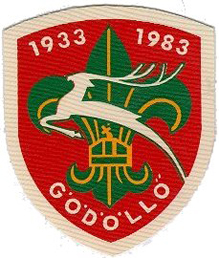
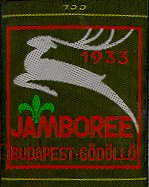
The Fourth World Jamboree was held in Gödöllõ, Hungary. There were 25,792 Scouts in camp. A young Scout was kneeling by his campfire when three uniformed men rode up on horseback: Count Pal Teleki, the Chief Scout of Hungary and the Chief of Staff for the jamboree; General Kisbarnaki Ferenc Farkas, a general staff officer of the Hungarian Royal Army; and Lord Robert Baden-Powell, the British hero of the Boer War and Chief Scout of the World. The men introduced themselves to the Scout and inspected his camp. They complimented him on a job well done and rode on. Later on, that Scout heard the closing address from the Chief Scout of the World, General Lord Robert Baden Powell. The Scout was impressed by the caliber and bearing of the three officers and resolved that he too would one day serve as a leader in the military. The young man's name was Béla Bánáthy. The daily Jamboree paper was printed in Hungarian, English, French and German with contributions in other languages. The Jamboree badge: the "Miraculous Stag" of Hungary. At the conclusion of the Jamboree, Baden-Powell spoke to the assembled Scouts:
Paul Ferenc Sujan, Béla Bánáthy, and Joseph Szentkiralyi (later Anglicized as St. Clair), three Scouts from Hungary, and R. Maurice Tripp, from the United States, were in attendance. Béla and Joe briefly met. His troop spent many weeks carving a massive, intricate gateway to their sub-camp. He looked forward to meeting, he hoped upon hope, the Chief Scout, Lord Robert Baden-Powell, himself. Béla reports:
Baden-Powell also tastes some of Paul Sujan's stew. All four — Paul Sujan, Béla Bánáthy, Joe St. Clair, and R. Maurice Tripp — will much later meet and play key roles in what will be called "White Stag Youth Leadership Development." 1907 | topBaden-Powell chose Brownsea Island as the location to test his idea of "Scouting for Boys". Four patrols of boys were recruited from Boys Brigade of Winton, Poole and Bournemouth and the sons of his own friends.[1][2] [1] ^ This history was initially based on A History of White Stag Leadership Development by Joe St. Clair, 1978. 8pp. Béla Bánáthy also made significant contributions to this record. [2] ^ From the Public Relations Department, Baden-Powell House, London, England. [3] ^ As reported in The Scouter, England's Scouting Association magazine, September, 1933. [4] ^ According to Béla, "Vitez" is the
name of a military order established by the Regent of Hungary. Members
of the order were selected based on their heroism during the First World
War. (Vitez means hero.) These where "knighted" by the Regent.
Béla says, "My father was a member of the order and I, as the oldest
son, inherited the title." (From the [5] ^ Troop Leader Development Staff Guide, (1974) No. 6154. Boy Scouts of America, Irving, Texas. [6] ^ A History of Wood Badge in the United States (1988) No. 3164. Boy Scouts of America, Irving, Texas. p. 45 |
|||||||||||||||||||||||||||||||||||||||||||||||||||||||||||||||||||||